
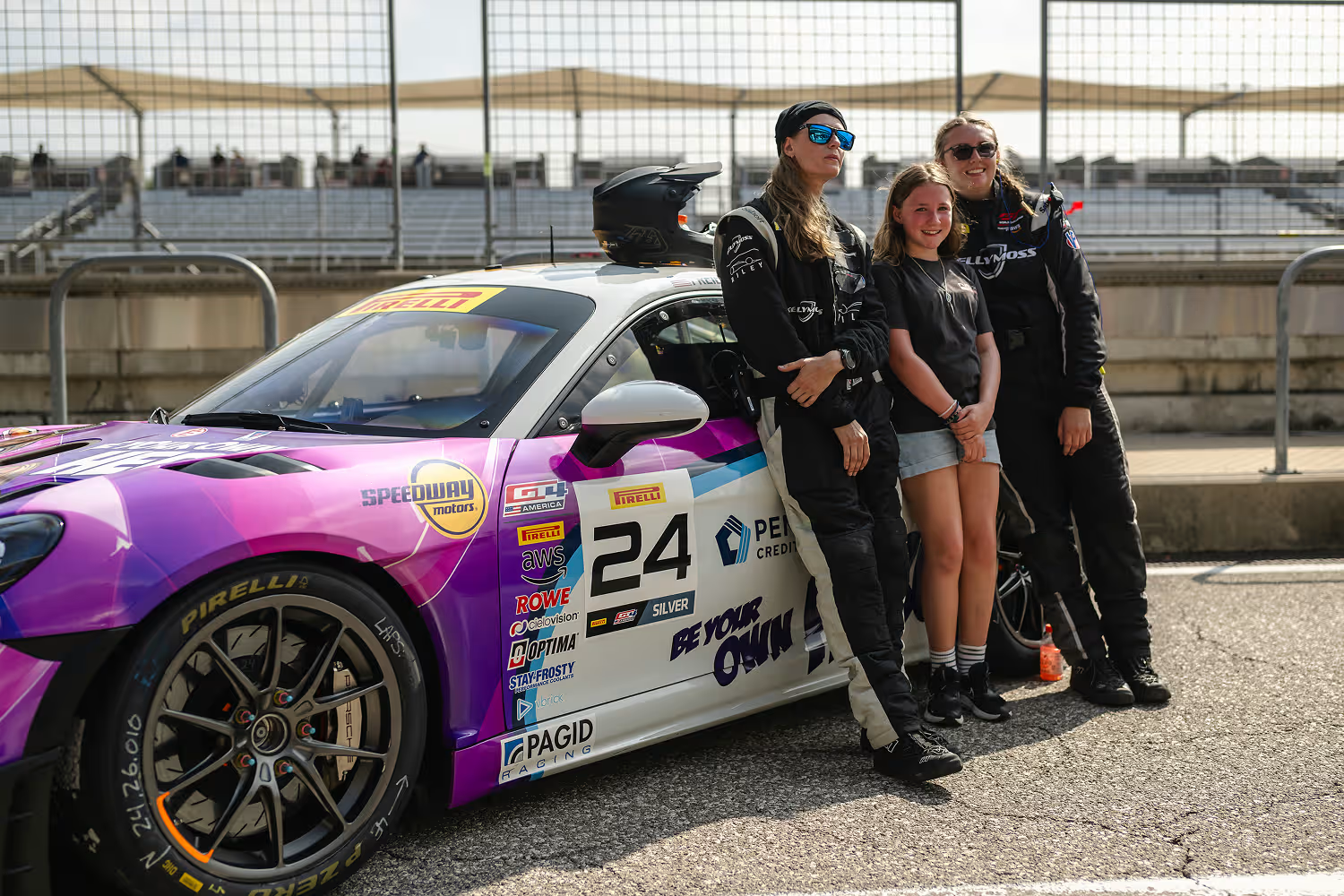
It Is Time to Retire “Gentleman Driver”
Motorsports has always been a sport built on courage, talent, engineering, money, relationships, and belief. It is romantic to talk about the driver, the car, the team, and the win. But anyone who has spent real time inside the paddock knows the truth is more layered than that.
This sport is also built by the people who choose to invest in it.
For decades, one of the most important figures in sports car racing has been casually referred to as the “gentleman driver.” The term has history. It came from a time when successful men, typically business owners and wealthy enthusiasts, have supplied funding, passion, and commitment that allowed race teams to exist, professional drivers to build careers, and young talent to find a pathway forward.
That role matters deeply. In fact, this role is one of the economic and cultural foundations of sports car racing.
The issue is not the role. The issue is the name.
Because the paddock is changing.
More women are entering motorsports as drivers, owners, executives, sponsors, engineers, fans, collectors, and serious customers. More women are building businesses, controlling wealth, making household financial decisions, leading brands, buying cars, investing in experiences, and choosing where their influence goes. This is not a small cultural footnote. It is a major economic shift.
By 2030, women in the United States are expected to control a significant share of tens of trillions of dollars in financial assets. Globally, women already influence the majority of consumer spending decisions. In Formula 1, women are now one of the most important drivers of fan growth. Female fans are younger, highly engaged, and entering the sport in significant numbers.
But the paddock has changed. Women are showing up with talent, resources, influence, and real commitment to the sport. The sport only benefits from the expansion of this role. I am suggesting an upgrade of the language as a starting point.
I do not believe anyone uses the term with bad intent. In most cases, it is used with deep respect.
In the paddock, it often refers to someone who makes the entire ecosystem work. Someone who brings the resources to compete. Someone who funds a seat, supports a team, partners with a professional driver, helps create opportunity, and often keeps a program alive.
We should not diminish that. We should elevate it.
Language has power. When a successful woman enters the paddock and hears that established name, the message may not be intentional, but it is still clear.
Our sport has not fully updated its picture of who is here, who we value, and where the sport is headed. This matters competitively. It matters culturally. And it matters commercially.
The role traditionally called the “gentleman driver” is one of the most important roles in modern sports car racing. These drivers are often accomplished people outside the car who bring discipline, resources, humility,mentoring and ambition into the sport. They are not simply buying access. The best of them are learning race craft, building relationships, understanding the sport, respecting the car, supporting young professionals, and investing in the infrastructure that makes racing possible.
They are also often the bridge between aspiration and opportunity.
A young driver may have talent, but talent alone rarely funds a season. A team may have capability, but capability alone does not pay for transporters, crew, tires, testing, engineering, hospitality, equipment, or development. The right funded driver can create a seat for a professional, stabilize a team, support a rising driver, and give the entire paddock more room to grow.
That is not a side role. That is a foundational role.
Which is exactly why the name should be worthy of the contribution.
So, what should we call it? Perhaps “Sporting Driver.”
It is elegant. It is serious. It is gender neutral. It carries the heritage of sportsmanship without locking the role to one gender or one outdated social structure. It suggests passion, commitment, competitiveness, and respect for the sport.
A Sporting Driver is someone who chooses to compete seriously while also helping sustain the ecosystem around them.
That person may be a man. That person may be a woman. That person may be a founder, executive, investor, collector, entrepreneur, or lifelong enthusiast. What matters is not whether they fit an old label. What matters is that they bring commitment, resources, respect, and competitive intent to the paddock.
This is not about disparaging the old ways or erasing history. And it is certainly not about taking something away from the men who helped build this sport.
It is about making the language big enough for the future.
Motorsports has a tremendous opportunity right now. The audience is changing. The ownership base is changing. The sponsor landscape is changing. The definition of influence is changing. Women are not standing outside the fence waiting to be invited in. They are already here. They are in the paddock, in the boardroom, in the car, in the grandstands, in the data room, in the shop, and on the ownership side of the table.
The smartest brands and race teams will understand this early. They will not treat women as a special initiative or a side campaign. They will recognize women as serious participants in the business and culture of the sport.
That starts with access. It starts with visibility. It starts with opportunity. And sometimes, it starts with something as simple as choosing words that reflect the world we are actually building.
The term “gentleman driver” served its era. The people it described helped build this sport, fund this sport, and create pathways for countless professionals.
But the next era needs something more accurate.
It needs a term that honors the driver, the investor, the competitor, the partner, and the person helping sustain the sport.
It needs a term that welcomes the women who are already here and the many more who are coming.
It needs the Sporting Driver.
